

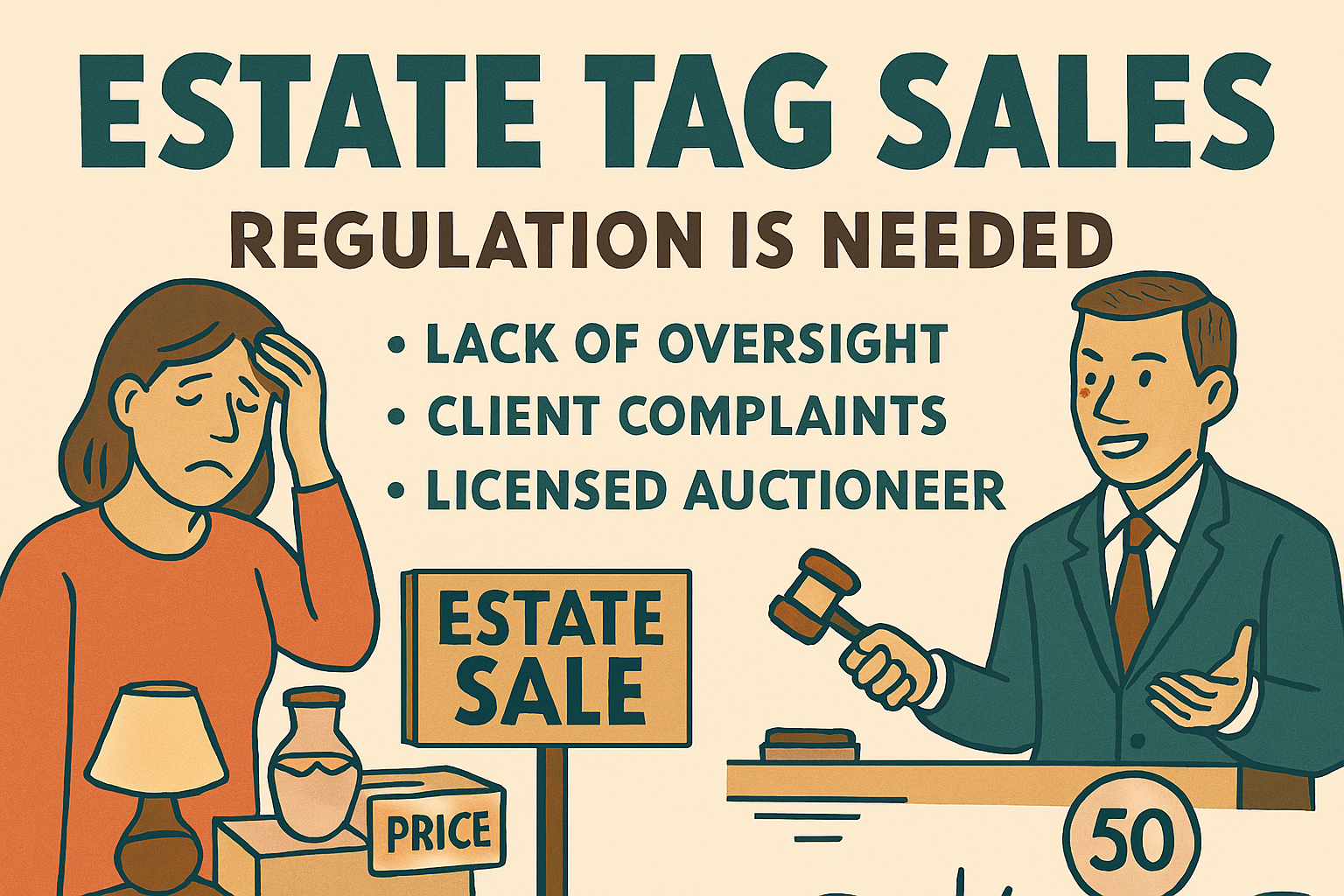
Estate tag sales have become a common method for liquidating household property when families face downsizing, relocation, or the settlement of an estate. These sales operate much like large yard sales, with items individually priced and sold directly to the public. While they may appear convenient, the absence of regulation in this industry has led to mounting concerns and documented complaints from clients who entrusted their family assets to tag sale companies.
One of the most pressing issues is the lack of oversight. Estate tag sale companies are not licensed or regulated by state boards, meaning they set their own rules and policies without accountability. This has resulted in a troubling pattern of client dissatisfaction. Complaints filed with the Better Business Bureau against estate sale companies, including well-known franchises such as Blue Moon Estate Sales, reveal recurring problems: undervaluing items, failing to provide transparent accounting, and leaving families with little recourse when disputes arise. Clients have reported frustration over valuable antiques and collectibles being sold for far less than their worth, inadequate marketing that limits buyer turnout, and poor communication regarding final proceeds.
Let’s consider this – Say you hire an estate tag sale company to liquidate your estate. They find prices for certain items, but for the most part the commonly unpriced items are things that are not marketable. These are commonly outdated electronics and appliances, used medical equipment, low-value household goods – such as Common kitchenware, worn furniture, and generic décor often fail to attract buyers, leaving families with unsold inventory.
When the sale is over, the family now is responsible for the cost of dumping the unsold items. Now the fun begins, as they are not required to ensure you have accurate records and a payout within 30 days of the end of the auction. So when they don’t do it – who do you call to complain? The State Attorney General, but he has larger fish to fry, so you hire an attorney, and the attorney tells you “Gee, I would love to help, but there isn’t enough interest to chase after this.”
Believe it or not, it happens.
These experiences underscore the need for regulation. Estate sales involve significant financial transactions and deeply personal property, yet operators are not required to hold a license, complete continuing education, or provide audited settlement statements. Without minimum standards for transparency and fiduciary responsibility, families remain vulnerable at a time when they most need professionalism and trust.
Licensed auctioneers, by contrast, operate under strict regulation enforced by state licensing boards such as the North Carolina Auctioneer Licensing Board. Auctioneers are bound by fiduciary duty, required to provide detailed settlement reports, and subject to disciplinary action if they fail to meet professional standards. This framework ensures accountability and protects consumers. Moreover, auctions establish fair market value through competitive bidding, rather than relying on arbitrary pricing. Families benefit from broader marketing reach, professional advertising, and the assurance that items will sell for what buyers are truly willing to pay.
The difference is profound. Estate tag sales may offer convenience, but they lack the safeguards necessary to protect clients from exploitation or negligence. Licensed auctioneers provide transparency, accountability, and professionalism, ensuring that estates are handled with the dignity and fairness they deserve. For families navigating the difficult process of liquidation, entrusting the task to a licensed auctioneer is not only the safer choice—it is the responsible one.

Leave a Reply
You must be logged in to post a comment.